
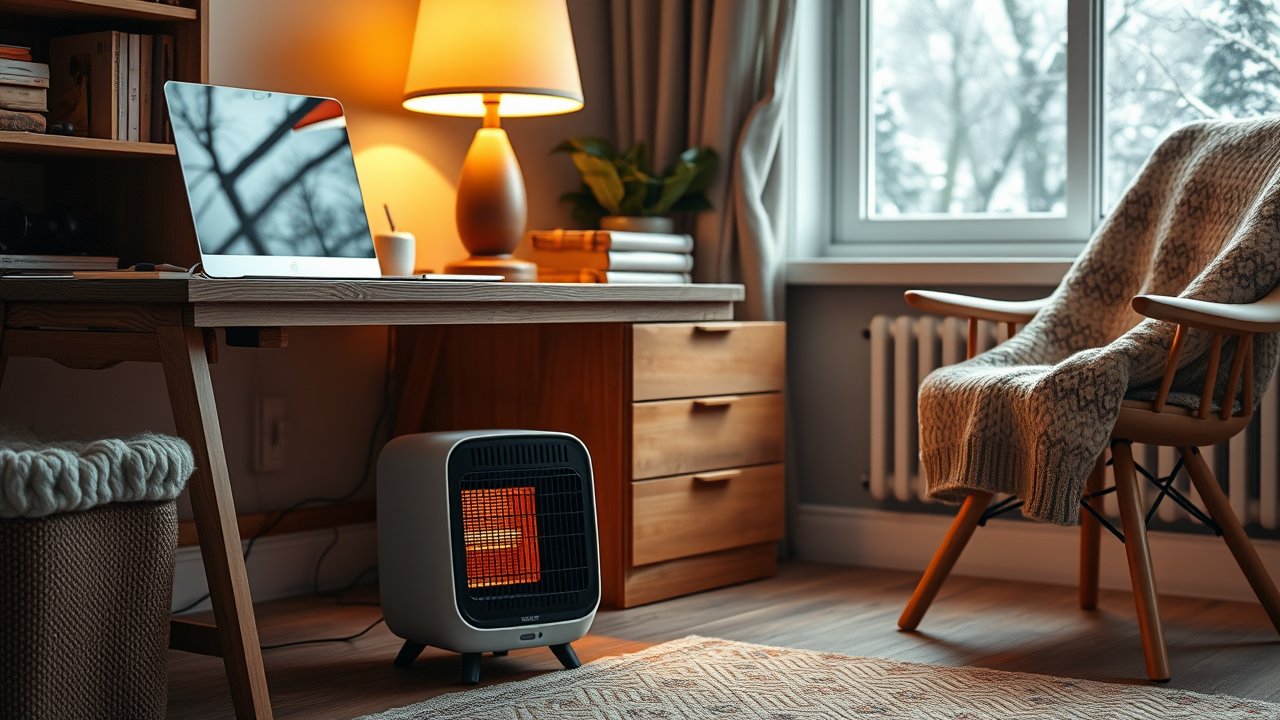
Cold fingers make for slow typing. When temperatures drop, heating an entire house just to keep one home office comfortable gets expensive fast. A small, efficient heater aimed at your workspace is the smarter move. But choosing the best space heater for home office use is trickier than grabbing the cheapest box fan heater at the hardware store. You need something quiet enough for video calls, safe enough to run for hours near paper and cables, and efficient enough not to spike your electric bill. This guide covers six heaters that fit different offices – from tiny under-desk panels to whole-room oil-filled radiators – plus the safety rules every remote worker should know.
As an Amazon Associate, I earn from qualifying purchases. This article contains affiliate links at no extra cost to you.
Quick Comparison Table
| Product | Price | Best For | Rating |
|---|---|---|---|
| Vornado VH200 | ~$80 | Best overall | ⭐⭐⭐⭐⭐ |
| Lasko 754200 Ceramic Heater | ~$35 | Best budget | ⭐⭐⭐⭐ |
| De’Longhi Oil-Filled Radiator | ~$100 | Best silent heater | ⭐⭐⭐⭐⭐ |
| Dreo Oscillating Ceramic Heater | ~$60 | Best smart features | ⭐⭐⭐⭐ |
| Cozy Products Under-Desk Panel Heater | ~$90 | Best under-desk heater | ⭐⭐⭐⭐ |
| Dyson Hot+Cool | ~$500+ | Best premium (heat, cool, purify) | ⭐⭐⭐⭐ |
Prices are approximate at the time of writing and may vary. Check Amazon for the current price.
Our Top Picks at a Glance
The Vornado VH200 is our top choice because it circulates warm air evenly through a small room instead of blasting one spot, and it has the safety features you want for all-day use. If you’re on a tight budget, the Lasko 754200 is a proven little ceramic heater for around $35. And if silence is your top priority for calls and recordings, the De’Longhi oil-filled radiator makes no fan noise at all.
Reviews – The Best Space Heater for Home Office Use in 2026
1. Vornado VH200 – Best Overall
Vornado built its reputation on air circulation, and that’s exactly what makes the VH200 great for a home office. Instead of heating a small cone of air in front of it, the VH200 uses Vornado’s vortex airflow to move warm air around the entire room. The result is more even warmth – your feet and hands stay comfortable, not just whichever side faces the heater.
It has two heat settings plus a fan-only mode, an adjustable thermostat, tip-over protection, and automatic shut-off if it overheats. The case stays cool to the touch, which matters if it sits near your desk or a pet wanders by. The fan is audible but has a low, steady hum that most people tune out quickly. Owners regularly report using the same unit for many winters.
Pros:
– Even, whole-room heat circulation
– Tip-over and overheat protection
– Cool-touch exterior
– Solid long-term reliability
Cons:
– Fan noise noticeable during very quiet calls
– No remote or smart controls
– Plain design
2. Lasko 754200 Ceramic Heater – Best Budget Option
The Lasko 754200 is one of the best-selling small heaters in the US for good reason: it’s compact, cheap, and does exactly what it promises. The ceramic element heats up within seconds, and the small footprint lets it sit on the floor beside your desk without getting in the way.
It offers high heat, low heat, and fan-only modes, with an adjustable thermostat dial. Overheat protection is built in, and the cool-touch exterior is a nice bonus at this price. It’s ideal for heating your personal space rather than an entire room. If your office is a corner of a larger living area, this is a great way to stay warm without heating the whole house.
Pros:
– Very affordable
– Heats quickly
– Small and lightweight
– Overheat protection
Cons:
– Best for personal space, not large rooms
– No tip-over switch on some versions – check the listing
– Basic manual controls
3. De’Longhi Oil-Filled Radiator – Best Silent Heater
If you record podcasts, take client calls all day, or simply hate fan noise, an oil-filled radiator is the answer. There’s no fan – the sealed oil inside heats up and radiates warmth steadily. It takes 15 to 20 minutes to warm up, but once it does, it keeps a room comfortable with almost zero noise.
De’Longhi’s radiators include an adjustable thermostat, multiple power settings, and safety features like overheat protection. Because the heat is gentle and doesn’t dry the air the way fan heaters can, many people find it more comfortable over a full workday. The downside is size and weight – it’s on wheels, but it’s bulkier than a ceramic heater.
Pros:
– Completely silent operation
– Steady, comfortable heat
– Doesn’t dry out the air as much
– Retains heat after switching off
Cons:
– Slow to warm up
– Larger and heavier
– Surfaces get hot – keep clearance
4. Dreo Oscillating Ceramic Heater – Best Smart Features
Dreo has become a popular name in home comfort thanks to quiet motors and modern features. Their ceramic heaters typically offer oscillation, a digital thermostat, a remote, timers, and on some models app or voice control. Setting a timer so the heater turns on 15 minutes before your workday starts is a small luxury that feels huge on cold mornings.
The digital thermostat holds temperature more precisely than the dial on cheap heaters, which helps with both comfort and electricity use. Oscillation spreads heat across a wider area, useful if you move between a desk and a reading chair.
Pros:
– Digital thermostat and timer
– Remote control (app on some models)
– Oscillation for wider coverage
– Quiet mode
Cons:
– More expensive than basic ceramic heaters
– Smart features vary by model
– Display can be bright in a dark room
5. Cozy Products Under-Desk Panel Heater – Best Under-Desk Heater
Cold feet are the most common winter home office complaint. Under-desk panel heaters solve that with very little power. These thin panels sit under your desk and warm your legs and feet directly. Many models use under 200 watts – a fraction of the 1,500 watts a typical space heater uses.
You won’t heat a room with one, but you don’t need to. If your body is warm from the knees down, you’ll feel comfortable even in a cooler room. That makes this the most energy-efficient option on our list for people who sit at their desks for long stretches.
Pros:
– Very low power consumption
– Targets cold feet and legs directly
– Silent operation
– Fits under almost any desk
Cons:
– Doesn’t heat the room
– Less useful if you stand or move around a lot
– Panel surface gets warm – keep blankets clear
6. Dyson Hot+Cool – Best Premium Option
The Dyson Hot+Cool is expensive, but it replaces three devices: a heater in winter, a fan in summer, and – on purifier models – an air purifier year-round. It’s bladeless, safe around kids and pets, and has precise temperature control, a remote, and app connectivity on newer models.
Is it worth it purely as a heater? Not really – a $80 Vornado heats just as well. But if you want one sleek device that keeps your office comfortable all year and cleans the air, it’s a compelling choice for a premium setup.
Pros:
– Heats, cools, and (on some models) purifies
– No exposed heating elements
– Precise thermostat and app control
– Premium design
Cons:
– Very expensive
– Overkill if you only need heat
– Replacement filters add cost
How We Researched & Selected These Products
We based our selections on research and user reviews rather than hands-on lab testing. We compared manufacturer specifications, safety certifications (UL or ETL listing), and safety features like tip-over and overheat protection, then analyzed thousands of verified buyer reviews for real-world reliability, noise complaints, and long-term durability. We also reviewed fire safety guidance from public agencies and only included heaters with automatic safety shut-offs. Finally, we weighed how well each heater fits typical home office use: running for many hours, sitting near electronics, and staying quiet during calls.
Buyer’s Guide – What to Look for in a Space Heater for Home Office Use
Heater Type: Ceramic, Oil-Filled, or Panel
Ceramic heaters warm up fast and are compact – great for small rooms or personal space. Oil-filled radiators are silent and provide steady heat but take longer to warm up. Panel heaters use very little power and target your legs. Choose based on whether you care most about speed, silence, or efficiency.
Room Size and Wattage
Most plug-in heaters top out at 1,500 watts, which is enough for a room of about 150 square feet. For larger spaces, consider an oil-filled radiator or a circulator like the Vornado. Don’t try to heat a large open-plan space with a single small heater – focus on your desk area instead.
Safety Features (Non-Negotiable)
Look for tip-over protection, overheat shut-off, a cool-touch exterior, and a UL or ETL certification mark. The U.S. Consumer Product Safety Commission recommends keeping heaters at least three feet from anything that can burn, plugging them directly into a wall outlet, and never leaving them running unattended.
Noise Level
Fan heaters produce a steady hum. For call-heavy jobs, choose an oil-filled radiator or panel heater. If you go with a fan heater, look for a “quiet” or “eco” mode.
Thermostat and Timer
A digital thermostat saves energy by cycling the heater off once the room reaches your target temperature. Timers let you warm the office before you sit down and avoid leaving the heater on after work.
Price vs. Quality – What to Expect at Each Budget
- Under $50: Simple ceramic heaters for personal space. Check for tip-over protection.
- $50–$120: Better thermostats, quieter fans, oscillation, and oil-filled radiators.
- $120+: Smart features, multi-function designs, and premium build quality.
How to Keep Your Home Office Warm for Less
A heater works best when your office holds heat. Close the office door, use a draft stopper, and add a rug if you have hard floors. Thick curtains help at night. Combine a small heater with warm lighting – our home office lighting setup guide explains how warmer color temperatures make a space feel cozier in winter. And if you sit all day, a good footrest keeps your feet off a cold floor, which makes a surprising difference.
Frequently Asked Questions
Is it safe to leave a space heater on all day in a home office?
It can be, if you use a heater with tip-over and overheat protection, keep three feet of clearance, and plug it directly into a wall outlet – never into an extension cord or power strip. Turn it off whenever you leave the room for more than a few minutes.
How much does it cost to run a space heater for a workday?
A 1,500-watt heater running at full power for eight hours uses 12 kWh. At an average US electricity rate of around 16 to 17 cents per kWh, that’s roughly $2 per day. Thermostats cut that significantly because the heater cycles off. Panel heaters using 150 to 200 watts cost only a few cents per day.
Can I plug a space heater into a power strip?
No. Space heaters draw a lot of current, and most power strips aren’t designed for that load. Plug heaters directly into a wall outlet, and avoid running other high-wattage devices on the same circuit.
What’s the quietest type of space heater?
Oil-filled radiators and panel heaters are virtually silent because they have no fan. They’re the best choice for podcasting, recording, or frequent video calls.
Final Verdict
The Vornado VH200 is the best space heater for home office use for most people: it heats a small room evenly, includes the key safety features, and lasts for years. Budget shoppers should grab the Lasko 754200, while anyone who takes lots of calls will love the silent De’Longhi oil-filled radiator. If cold feet are your main problem, an under-desk panel heater is the most efficient fix of all. Whatever you choose, follow basic safety rules and you’ll stay warm, focused, and productive all winter.