
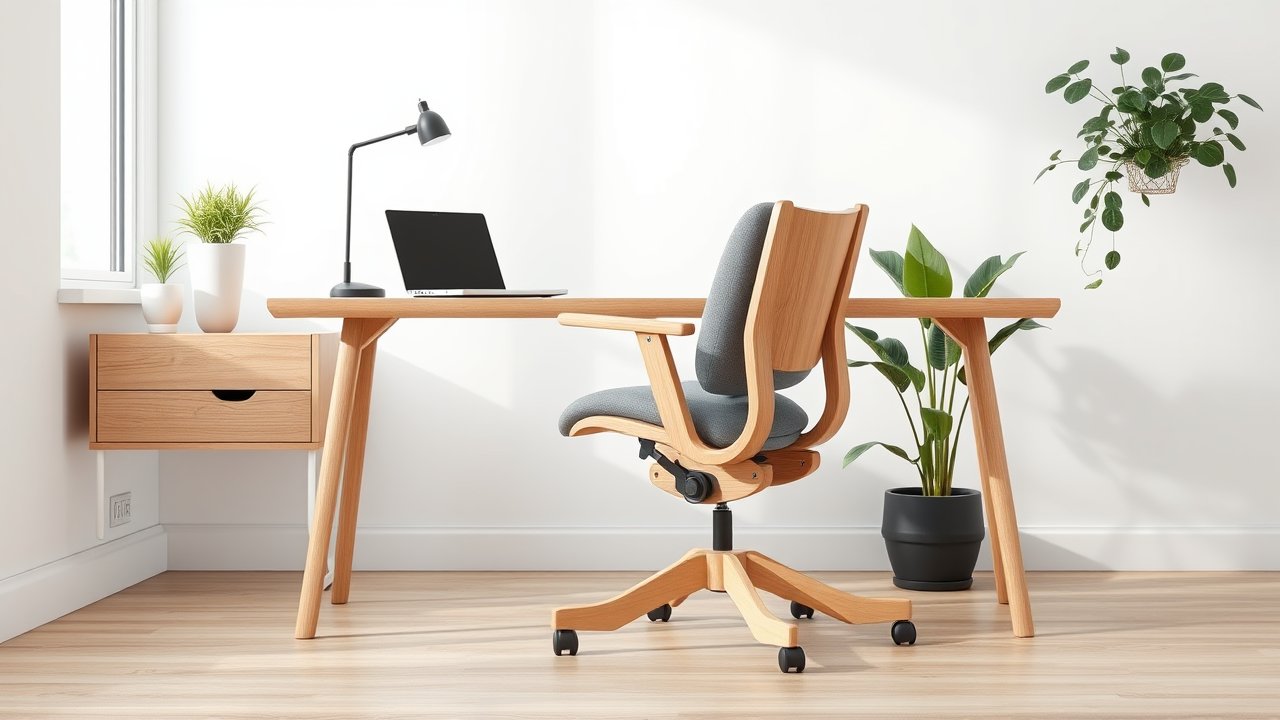
If you catch yourself slouching by mid-morning, your chair might be part of the problem. Kneeling chairs take a different approach to sitting: they tilt your hips forward and shift some of your weight onto your shins, which naturally opens up the angle between your torso and thighs. Many users say it makes upright posture feel effortless. But not every model is comfortable, and kneeling chairs aren’t for everyone. In this guide, we compare the best kneeling chair options for home offices – from the iconic Varier Variable Balans to budget-friendly picks – and explain exactly who should (and shouldn’t) make the switch.
As an Amazon Associate, I earn from qualifying purchases. This article contains affiliate links at no extra cost to you.
Quick Comparison Table
| Product | Price | Best For | Rating |
|---|---|---|---|
| Varier Variable Balans | ~$500+ | Best overall (premium) | ⭐⭐⭐⭐⭐ |
| DRAGONN by VIVO Kneeling Chair | ~$90 | Best budget | ⭐⭐⭐⭐ |
| Sleekform Kneeling Chair | ~$150 | Best rocking base | ⭐⭐⭐⭐ |
| Kneeling Chair with Backrest | ~$150 | Best with back support | ⭐⭐⭐⭐ |
| Varier Move | ~$400+ | Best active sit-stand perch | ⭐⭐⭐⭐ |
| Flash Furniture Mobile Kneeling Chair | ~$80 | Best with casters | ⭐⭐⭐⭐ |
Prices are approximate at the time of writing and may vary. Check Amazon for the current price.
Our Top Picks at a Glance
The Varier Variable Balans is the original Norwegian kneeling chair design, and its wooden rocking base remains the gold standard. On a budget, the DRAGONN by VIVO is an adjustable, well-reviewed entry point for under $100. If you know you’ll miss leaning back, choose a kneeling chair with a backrest so you can rest your spine between focus sessions.
Reviews – The Best Kneeling Chair Options for Your Home Office
1. Varier Variable Balans – Best Overall
The Variable Balans was designed in 1979 by Norwegian designer Peter Opsvik, and it’s still the chair most people picture when they hear “kneeling chair.” Its curved wooden base rocks gently, letting you shift between leaning forward to type and rocking back to read. That constant micro-movement is the whole point: your body stays active instead of locking into one position.
The build quality is excellent, with bentwood frames and replaceable cushions in many fabric options. It isn’t height-adjustable, so make sure your desk height works with it – it suits standard 28 to 30-inch desks for most average-height users. The price is high, but owners frequently report using the same chair for a decade or more.
Pros:
– Original, proven design
– Rocking base encourages movement
– Excellent build quality and longevity
– Attractive furniture-like look
Cons:
– Expensive
– Not height-adjustable
– Takes time to get used to
2. DRAGONN by VIVO Kneeling Chair – Best Budget Option
If you want to try kneeling without spending hundreds of dollars, the DRAGONN by VIVO is the most popular place to start. It has a sturdy metal frame, thick cushions on both the seat and knee pad, and a height adjustment so you can match it to your desk. Caster wheels let you roll it around easily.
Based on user reviews, comfort is good for the price, though the knee cushions can feel firm at first. Most people use it for one to two hours at a time and switch to a regular chair afterward – which is exactly how ergonomists recommend using kneeling chairs anyway.
Pros:
– Affordable entry into kneeling chairs
– Height adjustable
– Thick cushions
– Rolls on casters
Cons:
– Metal frame looks less refined than wood
– Knee pads firm for some users
– No rocking motion
3. Sleekform Kneeling Chair – Best Rocking Base on a Budget
Sleekform offers kneeling chairs with a wooden rocking base similar in spirit to the Varier, at a much lower price. The rocking motion helps you avoid static posture, and the wooden frame looks more at home in a living space than a metal office stool.
Cushion quality is solid, and the frame is sturdy. It’s not as refined as the Varier, and adjustability is limited, but it’s the best way to experience the rocking style for well under premium prices.
Pros:
– Rocking motion at a mid-range price
– Wood frame looks good in any room
– Comfortable padding
Cons:
– Limited height adjustment
– Assembly can be fiddly
– Heavier than metal frames
4. Kneeling Chair with Backrest – Best With Back Support
One complaint about traditional kneeling chairs is that there’s nothing to lean back on. Several brands now offer hybrid models that add a backrest. These are a good compromise if you want the open hip angle of a kneeling chair but still like to lean back during calls or reading.
Look for a backrest that adjusts in height and angle, and make sure the seat height matches your desk. Hybrid designs are also easier to get used to for first-time kneeling chair users.
Pros:
– Backrest for breaks
– Easier transition for beginners
– Often height-adjustable
Cons:
– Bulkier than standard kneelers
– Backrest quality varies by brand
– Less “active” sitting
5. Varier Move – Best Active Sit-Stand Perch
The Varier Move isn’t a kneeling chair in the strict sense, but it belongs on this list because it solves the same problem from another angle. It’s a saddle-style stool with a rounded base that tilts in every direction. It works best at a standing desk set slightly lower than full standing height, letting you perch and move constantly.
If you already own a standing desk and want something for the “in-between” moments, the Move is excellent. For a deeper dive on this style, see our guide to standing desk accessories.
Pros:
– Encourages constant movement
– Perfect for standing desks
– Gas-lift height adjustment
Cons:
– Expensive for a stool
– Not suited for long sitting sessions
– Requires good balance
6. Flash Furniture Mobile Kneeling Chair – Best With Casters
The Flash Furniture mobile kneeling chair is a no-frills option that rolls on casters, making it easy to move between your desk and a filing cabinet or second workstation. It’s compact, light, and straightforward to adjust.
It’s a good fit for people who want a kneeling chair as a secondary seat rather than their main chair. Padding is decent but thinner than premium models.
Pros:
– Affordable
– Compact and mobile
– Simple to adjust
Cons:
– Thinner padding
– Basic look
– Casters can roll unexpectedly on hard floors
How We Researched & Selected These Products
These recommendations are based on research and user reviews, not personal long-term testing. We analyzed manufacturer specifications, materials, adjustability, and warranty information, then read through thousands of verified buyer reviews to spot recurring comfort issues – especially knee pressure and shin discomfort, the most common complaints with kneeling chairs. We also looked at ergonomics research on seated hip angles and active sitting, and prioritized chairs with strong long-term durability reports. Finally, we included options across budgets and styles so you can find a kneeling chair that matches your desk, room, and comfort needs.
Buyer’s Guide – How to Choose the Best Kneeling Chair
Understand How Kneeling Chairs Work
A kneeling chair tilts your seat forward to an angle of roughly 20 to 30 degrees. That opens your hip angle to about 110 degrees, which helps your lower back keep its natural curve. Your shins rest on a pad that keeps you from sliding forward. Most of your weight still sits on your bottom – the knee pad just stabilizes you.
Who Should Try One
Kneeling chairs suit people who slouch, sit on the edge of their regular chair, or want to switch positions throughout the day. They’re best used in rotation: an hour on the kneeling chair, then time in a supportive office chair or standing. If you want to compare full ergonomic chairs, see our list of the best ergonomic chairs for back pain.
Who Should Avoid Them
If you have knee problems, poor circulation in your legs, or recent knee surgery, a kneeling chair may cause more harm than good. Pregnant users should also check with a doctor first.
Adjustability and Desk Height
A height-adjustable kneeling chair is easier to match to your desk. Your elbows should sit at roughly 90 degrees while typing, with your forearms parallel to the floor. Fixed-height chairs like the Varier work with standard desk heights for most average-height users.
Cushion Quality
Knee pads take a lot of pressure. Look for dense foam that doesn’t flatten after a few weeks, and removable covers for cleaning.
Price vs. Quality – What to Expect at Each Budget
- Under $100: Metal frames, basic adjustment. Great for trying the concept.
- $100–$250: Wooden frames, rocking bases, backrest hybrids.
- $400+: Premium designer chairs with long warranties and top materials.
How to Get Used to a Kneeling Chair
Start with 20 to 30 minutes at a time and switch back to your regular chair. Over two to three weeks, gradually extend your sessions. Wear comfortable pants, and make sure your shins (not your kneecaps) rest on the pad. The Mayo Clinic’s office ergonomics guide is a helpful reference for setting up monitor and keyboard heights with any chair. If you want to get the rest of your workstation right, read our guide on how to adjust your office chair.
Kneeling Chair vs. Ergonomic Office Chair
It’s tempting to see a kneeling chair as a replacement for a traditional office chair, but they do different jobs. A good ergonomic chair supports you: adjustable lumbar support, armrests, a reclining backrest, and seat depth adjustment let you relax into a healthy posture for hours. A kneeling chair does the opposite – it gives you less support so your own core muscles stay engaged.
That’s why the best approach for most people is to own both. Use the ergonomic chair for long calls, deep focus sessions, and the end of the day when you’re tired. Switch to the kneeling chair for shorter bursts of typing, email, or creative work when you want to feel alert. If you also have a standing desk, you get three positions to rotate through, which is ideal. If you’re still shopping for a primary chair, see our list of the best ergonomic chairs for home office.
Common Mistakes With Kneeling Chairs
- Sitting too long right away. Your shins and core need time to adapt. Build up gradually.
- Resting on your kneecaps. The pad should support your shins, just below the knee.
- Ignoring desk height. If you hunch forward to reach the keyboard, you lose the posture benefit.
- Using it as your only chair. Rotation is what makes kneeling chairs work.
- Skipping shoes or socks on wooden bases. Some people find rocking more stable with grippy socks or shoes on a rug.
Frequently Asked Questions
Are kneeling chairs good for your back?
They can help many people maintain a more upright posture by opening the hip angle. But they’re not a cure-all. The biggest benefit comes from switching positions throughout the day rather than sitting in any single chair for eight hours.
Can you sit in a kneeling chair all day?
Most people shouldn’t. Use a kneeling chair for one to two hours at a time, then change to a standard ergonomic chair or stand. Constant kneeling can put strain on your knees and shins.
Do kneeling chairs hurt your knees?
Your weight should mostly rest on your seat, with only light pressure on your shins. If your knees hurt, the seat may be tilted too far forward, or you may be resting your kneecaps instead of your shins on the pad.
What desk height works with a kneeling chair?
Kneeling chairs typically sit a bit lower than office chairs. A standard 28 to 30-inch desk works for most average-height people. A height-adjustable standing desk gives you the most flexibility.
Final Verdict
The Varier Variable Balans is the best kneeling chair overall – a beautifully built original that encourages healthy movement and lasts for years. If you want to try kneeling without a big investment, the DRAGONN by VIVO is a smart, adjustable starter. And if you can’t give up leaning back, choose a kneeling chair with a backrest. Use any of them in rotation with a supportive office chair, and you’ll likely notice better posture within a few weeks.