
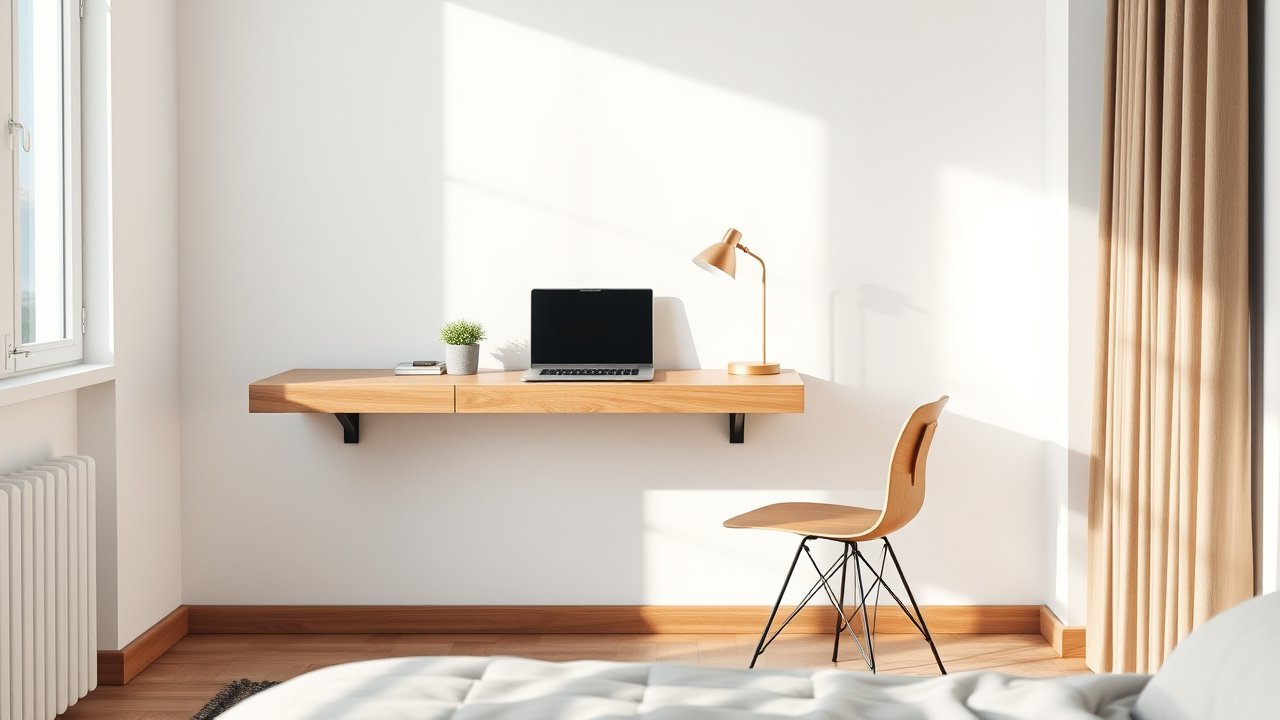
Not every home has room for a full-size desk. In a studio apartment, a narrow hallway, or a bedroom corner, a traditional desk with four legs can dominate the space. A floating desk solves that problem by mounting directly to the wall. With no legs underneath, the floor stays clear, the room feels bigger, and cleaning is easier. Some models fold flat when you’re done working, so your office literally disappears at the end of the day. Choosing the best floating desk means balancing surface size, weight capacity, storage, and how securely it mounts to your walls. In this guide, we compare six styles of wall-mounted desks and explain how to install one safely – including what to do if you rent.
As an Amazon Associate, I earn from qualifying purchases. This article contains affiliate links at no extra cost to you.
Quick Comparison Table
| Product | Price | Best For | Rating |
|---|---|---|---|
| Prepac Floating Desk with Storage | ~$150–$200 | Best overall | ⭐⭐⭐⭐⭐ |
| Fold-Down Wall Desk with Shelves | ~$100–$180 | Best fold-away | ⭐⭐⭐⭐ |
| Ladder Desk with Shelves | ~$100–$200 | Best renter-friendly | ⭐⭐⭐⭐ |
| Solid Wood Floating Desk | ~$150–$300 | Best style | ⭐⭐⭐⭐ |
| Floating Desk with Drawer | ~$80–$150 | Best compact with storage | ⭐⭐⭐⭐ |
| Corner Floating Desk | ~$60–$120 | Best for corners | ⭐⭐⭐⭐ |
Prices are approximate at the time of writing and may vary. Check Amazon for the current price.
Our Top Picks at a Glance
The Prepac Floating Desk with Storage is the best floating desk for most people: it offers a usable work surface plus shelves and cubbies above, all mounted with a hanging rail system. If you need your desk to disappear completely, a fold-down wall desk closes flat like a cabinet. Renters who can’t drill should consider a ladder desk, which leans against the wall with minimal anchoring.
Reviews – The Best Floating Desk Options for Small Spaces
1. Prepac Floating Desk with Storage – Best Overall
Prepac is known for practical, affordable furniture, and its floating desk is a popular choice for small spaces. It combines a desk surface with an upper hutch that includes shelves and cubbies – perfect for storing supplies, books, and a router without taking up desk space.
It mounts with a hanging rail system that distributes weight across the wall. When installed into studs, it’s sturdy enough for a laptop, monitor, and accessories. Assembly takes some time, but the result is a complete workstation in a slim footprint.
Pros:
– Built-in storage above the desk
– Hanging rail mounting for strength
– Clean, simple design
– Good value
Cons:
– Requires wall drilling and stud mounting
– Laminate finish rather than solid wood
– Assembly takes time
2. Fold-Down Wall Desk with Shelves – Best Fold-Away
Fold-down desks look like a slim wall cabinet when closed. Open the front panel, and it becomes a desk surface with shelves and cubbies inside. When you finish work, close it and your office is hidden – a big advantage in studios, living rooms, and guest bedrooms.
The work surface is usually smaller than a regular desk, so it’s best for laptops. Check the weight rating of the fold-down surface and avoid leaning on it heavily.
Pros:
– Hides your office when closed
– Built-in storage
– Very space-efficient
– Great for multipurpose rooms
Cons:
– Smaller work surface
– Lower weight capacity on the flap
– Not ideal for monitors
3. Ladder Desk with Shelves – Best Renter-Friendly
Ladder desks lean against the wall and typically need only a small anti-tip anchor. They combine a desk surface with shelves above, offering a lot of storage in a small footprint. Because they stand on the floor, they’re not technically floating, but they deliver the same space-saving, open feel.
They’re a great option for renters who don’t want to install heavy wall-mounted furniture.
Pros:
– Minimal wall installation
– Lots of shelf storage
– Stylish look
– Easy to move
Cons:
– Smaller desk surface
– Can wobble without anchoring
– Uses some floor space
4. Solid Wood Floating Desk – Best Style
If you want a floating desk that looks like a piece of custom furniture, a solid wood desk with hidden brackets is the way to go. These desks typically mount with concealed steel brackets for a clean, minimal look.
Solid wood is heavier and more durable than particleboard, but it requires careful stud mounting. Many options come in walnut, oak, or acacia.
Pros:
– Beautiful, high-end look
– Durable solid wood
– Clean minimalist design
Cons:
– Heavier – requires secure mounting
– More expensive
– No built-in storage on many models
5. Floating Desk with Drawer – Best Compact With Storage
A floating desk with a built-in drawer offers a small amount of hidden storage for pens, notebooks, and chargers. These are often compact and work well in hallways or small bedrooms.
Look for models with soft-close or smooth-glide drawers and a good weight rating.
Pros:
– Hidden storage
– Compact footprint
– Clean look
Cons:
– Drawer reduces knee clearance
– Smaller surface
– Weight capacity varies
6. Corner Floating Desk – Best for Corners
Corner floating desks fit into an unused corner, turning dead space into a workstation. They usually have a triangular or curved surface and mount to two walls for stability.
They’re best for laptops and light work. If you need more space, consider an L-shaped desk instead.
Pros:
– Uses dead corner space
– Mounts to two walls for stability
– Affordable
Cons:
– Small surface
– Limited for monitors
– Requires careful measuring
How We Researched & Selected These Products
These picks are based on research and user reviews. We compared surface dimensions, weight capacities, mounting systems, materials, and storage options, then analyzed thousands of verified buyer reviews for installation difficulty, sturdiness, and durability. We focused on desks that mount securely, offer practical workspace, and fit small spaces. We also considered options for renters who can’t drill heavily into walls.
Buyer’s Guide – How to Choose the Best Floating Desk
Surface Size
For laptop work, a surface of about 30 inches wide and 18 inches deep is enough. For a monitor and keyboard, aim for at least 40 inches wide and 20 inches deep. Measure your wall space before buying.
Weight Capacity
Check the manufacturer’s rating and compare it to your setup. A laptop and accessories may weigh under 15 pounds, while a monitor setup could weigh 30 pounds or more. Never lean or sit on a floating desk.
Mounting System
Hanging rails and steel brackets mounted into studs are the most secure. Drywall anchors alone are not enough for most desks. If you’re unsure, consult a handyperson.
Storage
Built-in shelves, cubbies, and drawers help keep a small desk clutter-free. If your desk lacks storage, add a wall shelf above it. See our guide to the best desk organizers for more ideas.
Desk Height
Mount the desk at your correct sitting height – usually 28 to 30 inches for average-height adults, but shorter or taller users may need different heights. Use our desk height chart to find yours. A floating desk’s big advantage is that you can mount it at exactly the right height for your body.
Price vs. Quality – What to Expect at Each Budget
- Under $100: Small floating shelves-style desks and corner desks.
- $100–$200: Desks with storage, fold-down designs, and ladder desks.
- $200+: Solid wood and larger designs.
How to Install a Floating Desk Safely
- Find the studs with a stud finder. Mark them with painter’s tape.
- Measure your ideal desk height while sitting in your chair.
- Level the mounting rail or brackets and mark drill holes.
- Drill pilot holes into the studs.
- Attach the rail or brackets with the provided screws (or longer lag screws for heavy desks).
- Mount the desk and test it with light weight before adding equipment.
- Manage cables with adhesive clips or a cable raceway along the wall. See our guide to cable management for home office.
Renter Tips
If you rent, check your lease and talk to your landlord. Small screw holes are usually easy to patch with spackle when you move out. Alternatively, choose a ladder desk or a freestanding compact desk. Our guide to the best standing desks for small spaces includes compact options with legs.
Making a Small Floating Desk Work
Small desks require smart choices. Use a laptop stand with an external keyboard to save space and improve ergonomics. Mount your monitor on a wall arm if possible. Add a monitor light bar instead of a desk lamp. Keep only essentials on the desk and store everything else on shelves. For more small-space inspiration, see our guide to the best home office setup for small apartments.
Floating Desk Ideas for Different Rooms
Bedroom
Mount a slim floating desk next to a window for natural light, and keep it close to an outlet. A fold-down desk is ideal if you want to hide work at night and keep your bedroom restful.
Living Room
Use a floating desk with closed storage or a fold-down cabinet so the space doesn’t look like an office when guests visit. Choose a finish that matches your other furniture.
Hallway or Entryway
A shallow floating desk (12 to 16 inches deep) can turn a wide hallway into a compact laptop station. Keep it uncluttered so it doesn’t block traffic.
Closet (“Cloffice”)
Remove the closet doors or keep them open, mount a floating desk at the back wall, and add shelves above. Add a LED desk lamp or light strip, since closets are often dark.
Kitchen Nook
A small floating desk in a kitchen corner works well for meal planning, bills, or quick laptop tasks. Keep it away from the stove and sink.
Floating Desk vs. Standard Desk
A floating desk saves floor space, looks clean, and can be mounted at your ideal height. A standard desk is easier to install, easier to move, and usually offers a larger surface and more weight capacity. If you rent or move often, a compact standard desk may be more practical. If you own your home and want a clean, custom look, a floating desk is a great choice.
Common Mistakes to Avoid
- Mounting into drywall only – always use studs or rated anchors.
- Mounting at the wrong height – measure while seated.
- Overloading the desk – respect the weight rating.
- Ignoring cables – plan where power and cables will go.
- Choosing a desk too small for your actual workflow.
Frequently Asked Questions
Are floating desks sturdy?
When mounted into studs with the proper hardware, floating desks are sturdy enough for laptops, monitors, and accessories. Always follow the weight rating.
How high should a floating desk be?
Most people need a desk height between 26 and 30 inches. Measure your seated elbow height and mount the desk so your forearms are parallel to the floor while typing.
Can I put a monitor on a floating desk?
Yes, if the desk is large and strong enough. Consider a wall-mounted monitor arm to save space and weight.
Can renters install floating desks?
Many renters can, with landlord permission. Holes can be patched later. Ladder desks are a good alternative if drilling isn’t allowed.
Are floating desks good for ergonomics?
They can be excellent because you can mount them at the perfect height. Make sure there’s enough depth for a keyboard and proper screen distance.
What chair works with a floating desk?
A compact ergonomic chair with adjustable height works best. Look for armrests that can drop below the desk surface.
Final Verdict
The Prepac Floating Desk with Storage is the best floating desk for most small spaces, offering a practical work surface and built-in storage. Choose a fold-down wall desk if you want your office to disappear when you’re done, or a ladder desk if you rent and can’t drill much. Mount your desk securely at the right height, keep it organized, and you’ll have a functional home office in even the smallest room.