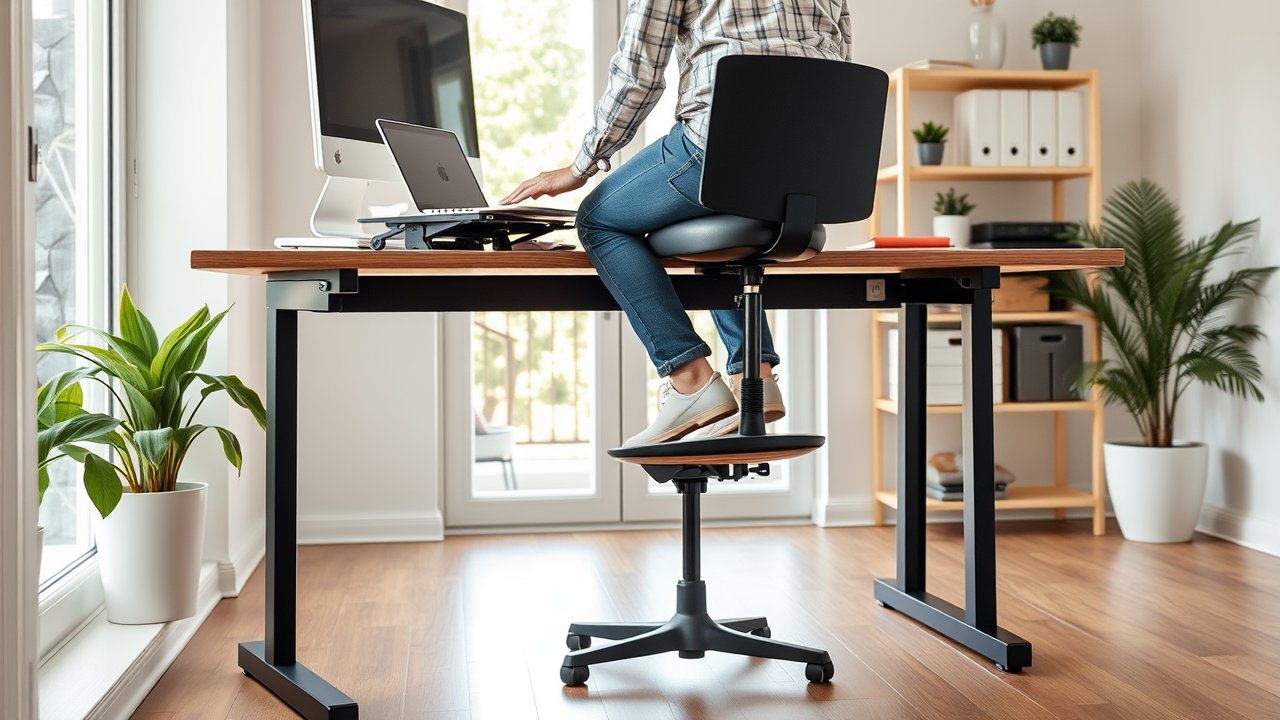
Standing desks are great, but standing for hours isn’t the goal. The real benefit comes from changing positions often – and that’s where a standing desk stool comes in. A good stool lets you “perch” at a mid-height position between sitting and standing, or sit actively while your desk stays raised. It takes pressure off your feet and lower back, keeps your core engaged, and makes it easier to stay at your standing desk longer. Choosing the best stool for standing desk use depends on how you like to move: wobble stools keep you in motion, saddle seats open your hips, and perching stools provide a stable lean. This guide compares six options and explains how to pick the right height and style for your setup.
As an Amazon Associate, I earn from qualifying purchases. This article contains affiliate links at no extra cost to you.
Quick Comparison Table
| Product | Price | Best For | Rating |
|---|---|---|---|
| Varier Move | ~$400+ | Best overall | ⭐⭐⭐⭐⭐ |
| Uncaged Ergonomics Wobble Stool | ~$100–$150 | Best value | ⭐⭐⭐⭐⭐ |
| Focal Upright Mobis II | ~$250+ | Best perching seat | ⭐⭐⭐⭐ |
| Salli Saddle Chair | ~$500+ | Best saddle seat | ⭐⭐⭐⭐ |
| Drafting Stool with Foot Ring | ~$80–$150 | Best for tall desks | ⭐⭐⭐⭐ |
| Flash Furniture Saddle Stool | ~$60–$90 | Best budget saddle | ⭐⭐⭐⭐ |
Prices are approximate at the time of writing and may vary. Check Amazon for the current price.
Our Top Picks at a Glance
The Varier Move is the best stool for standing desk users who want a beautifully designed, durable active seat with a wide height range. The Uncaged Ergonomics Wobble Stool offers similar active-sitting benefits for much less. If you prefer leaning rather than sitting, the Focal Upright Mobis II provides a stable perch at near-standing height.
Reviews – The Best Stool for Standing Desk Use
1. Varier Move – Best Overall
The Varier Move, designed by Peter Opsvik, is one of the most respected active seats available. Its rounded base lets you tilt in every direction, so you can lean toward your desk, rock back, or shift side to side. A gas lift provides a wide height range, letting you use it as a perch at standing height or a high seat.
The saddle-shaped seat opens your hip angle, encouraging an upright posture. The build quality is excellent, with durable materials and a long lifespan. It’s expensive, but many owners use it daily for years.
Pros:
– Excellent build quality
– Encourages constant movement
– Wide height range
– Comfortable saddle seat
Cons:
– Expensive
– Takes time to get used to
– Not for long stationary sitting
2. Uncaged Ergonomics Wobble Stool – Best Value
The Uncaged Ergonomics Wobble Stool is a popular active stool that tilts and rotates freely. Its weighted, rounded base brings you back to center, and the height adjusts to fit standing desks set at perching height.
It’s sturdy, comfortable, and much more affordable than designer options. Many users say it helps them stay engaged and move more during the day.
Pros:
– Great value
– Smooth wobble motion
– Height adjustable
– Sturdy base
Cons:
– Seat is firm for long sessions
– Less refined design
– Not ideal for very tall desks
3. Focal Upright Mobis II – Best Perching Seat
The Mobis II is designed specifically for perching at standing desks. It supports you at a semi-standing angle, taking pressure off your legs while keeping you close to standing height. Its base allows movement while providing stability.
If you want to stay at standing height but rest your legs, the Mobis II is one of the best solutions.
Pros:
– Designed for standing desk perching
– Keeps you near standing height
– Stable yet active
– Compact
Cons:
– Higher price
– Not for traditional sitting
– Limited availability
4. Salli Saddle Chair – Best Saddle Seat
The Salli saddle chair splits the seat in two, supporting each sit bone separately and reducing pressure on the pelvic area. It opens your hip angle significantly, encouraging a very upright posture.
It’s popular with dentists, surgeons, and people who work at high surfaces. It’s expensive and takes time to adapt to, but users who stick with it often love it.
Pros:
– Split seat reduces pressure
– Encourages upright posture
– High-quality construction
– Adjustable
Cons:
– Very expensive
– Unusual feel at first
– Not for everyone
5. Drafting Stool With Foot Ring – Best for Tall Desks
If you want a more traditional seat at a raised desk, a drafting stool provides a cushioned seat, backrest, and foot ring at a higher height range than office chairs. It’s a good option if you want to sit comfortably at a counter-height or partially raised standing desk.
It’s less active than wobble or saddle stools but more comfortable for longer sitting periods.
Pros:
– Familiar, comfortable seat
– Foot ring supports feet
– Backrest for support
– Affordable
Cons:
– Less active sitting
– Bulky
– Casters may roll on hard floors
6. Flash Furniture Saddle Stool – Best Budget Saddle
For a budget-friendly saddle seat, Flash Furniture offers adjustable saddle stools with casters. They provide the open-hip benefits of saddle seats at a fraction of the price.
They’re not as refined or comfortable as premium options, but they’re a great way to try saddle sitting.
Pros:
– Very affordable
– Height adjustable
– Opens hip angle
Cons:
– Basic padding
– Casters may roll unexpectedly
– Less durable
How We Researched & Selected These Products
These picks are based on research and user reviews. We compared height ranges, seat shapes, base designs, weight ratings, and warranty information. We analyzed thousands of verified owner reviews, focusing on comfort over time, stability, durability, and how well each stool works at standing desk heights. We also considered ergonomic research on active sitting and hip angles.
Buyer’s Guide – How to Choose the Best Stool for Standing Desk Use
Height Range
This is the most important spec. Measure your standing desk height at the “perching” position – usually a few inches below your normal standing height. Choose a stool whose height range covers that position.
Active vs. Stable
Wobble stools keep you moving and engaged. Saddle stools open your hips for better posture. Perching seats provide a stable lean. Drafting stools offer traditional comfort.
Seat Comfort
Firm seats encourage movement, while padded seats are better for longer periods. Saddle seats feel unusual at first but can be very comfortable once you adapt.
Base and Floor Type
Rounded bases work well on hard floors and low-pile carpet. Casters are convenient but may roll on hard floors. Add a mat if needed – see our list of the best standing desk mats.
Price vs. Quality – What to Expect at Each Budget
- Under $100: Basic wobble and saddle stools.
- $100–$300: Better build, smoother movement, more comfort.
- $300+: Premium designer seats with long warranties.
How to Use a Standing Desk Stool
- Set your desk to perching height – a few inches below standing.
- Adjust the stool so your hips are higher than your knees.
- Keep your feet flat on the floor or foot ring.
- Move often – shift, rock, and change positions.
- Rotate positions – sit in your office chair, perch, and stand throughout the day.
For more on getting your heights right, see our desk height chart and our guide to the best products for standing desk users.
A Sample Day: Sitting, Perching, and Standing
Not sure how to use a stool in practice? Here’s a simple routine many standing desk users follow:
- 8:30–10:00 a.m. – Sit in your office chair for focused deep work while you’re fresh.
- 10:00–10:45 a.m. – Stand for email and quick tasks.
- 10:45–11:30 a.m. – Perch on your stool during a video call. You stay alert and upright without tiring your legs.
- 11:30 a.m.–12:00 p.m. – Walk or stretch before lunch.
- 1:00–2:30 p.m. – Sit for detailed work after lunch.
- 2:30–3:30 p.m. – Perch while reading, reviewing documents, or brainstorming.
- 3:30–5:00 p.m. – Alternate between standing and perching as your energy dips.
The exact schedule doesn’t matter. What matters is changing positions every 30 to 60 minutes. A stool adds a comfortable middle option that makes those changes easier.
Floor Surface Matters
Wobble stools and rounded bases grip best on hard floors and low-pile carpet. On thick carpet, they sink and lose their wobble. On slippery hardwood, some bases can slide – a rubber-backed mat solves both problems. Stools on casters can roll away when you sit down at an angle; locking casters or a stool without wheels is safer for perching.
Stool vs. Kneeling Chair vs. Office Chair
A stool works at standing desk heights and encourages movement. A kneeling chair works at traditional desk heights and opens your hips. An office chair provides full support for long sessions. Many people use two or three in rotation. If you’re curious about kneeling chairs, check out our list of the best kneeling chairs.
The Cleveland Clinic’s overview of standing desks emphasizes that alternating positions is more beneficial than standing all day.
Who Benefits Most From a Standing Desk Stool?
- People who get sore feet from standing. A stool gives your feet a break without lowering the desk.
- People with lower back fatigue. Perching shifts your posture and relieves the static load of standing or sitting.
- Fidgeters. Wobble stools channel restless energy into gentle movement.
- People in small spaces. A compact stool takes up less room than a second office chair.
- Anyone who forgets to change positions. Having a stool next to the desk is a visual reminder to switch.
On the other hand, if you need full back support for long stretches, or have balance issues, a traditional ergonomic chair is the better primary seat. Use a stool as an addition, not a replacement.
Common Mistakes to Avoid
- Using the stool at full standing height – lower your desk slightly for perching.
- Sitting still – active stools work best when you move.
- Choosing the wrong height range for your desk.
- Expecting it to replace your office chair for long sessions.
Frequently Asked Questions
Do I need a stool for my standing desk?
Not necessarily, but a stool gives you another position between sitting and standing. It can make it easier to stay at your standing desk longer and reduce fatigue.
What height stool do I need for a standing desk?
Measure your desk at perching height. Your stool should let your hips sit higher than your knees with your feet flat on the floor.
Are wobble stools good for your back?
Wobble stools keep your core engaged and encourage movement, which many people find helpful. They provide less support than office chairs, so use them in rotation.
What’s the difference between a perching stool and a wobble stool?
A perching stool supports you at a high, semi-standing angle with a stable base, so it feels like leaning. A wobble stool lets you sit lower and tilts freely in every direction, keeping your core engaged. Perching stools suit people who want to stay near standing height; wobble stools suit people who like constant movement.
Can I sit on a stool all day?
Most active stools are designed for shorter sessions. Alternate between your stool, office chair, and standing.
Are standing desk stools safe on hardwood floors?
Most are, but rounded bases can slide on very smooth floors. A rubber-backed mat adds grip and protects the floor. Choose a stool without casters if you plan to perch at an angle.
Is a saddle stool comfortable?
Saddle stools feel unusual at first but can be very comfortable once you adapt. They open your hip angle and encourage upright posture.
Final Verdict
The Varier Move is the best stool for standing desk users who want premium quality and constant movement. The Uncaged Ergonomics Wobble Stool is the best value, while the Focal Upright Mobis II is ideal for perching near standing height. Choose the style that matches how you like to move, set your desk at perching height, and rotate positions throughout the day for the best results.