
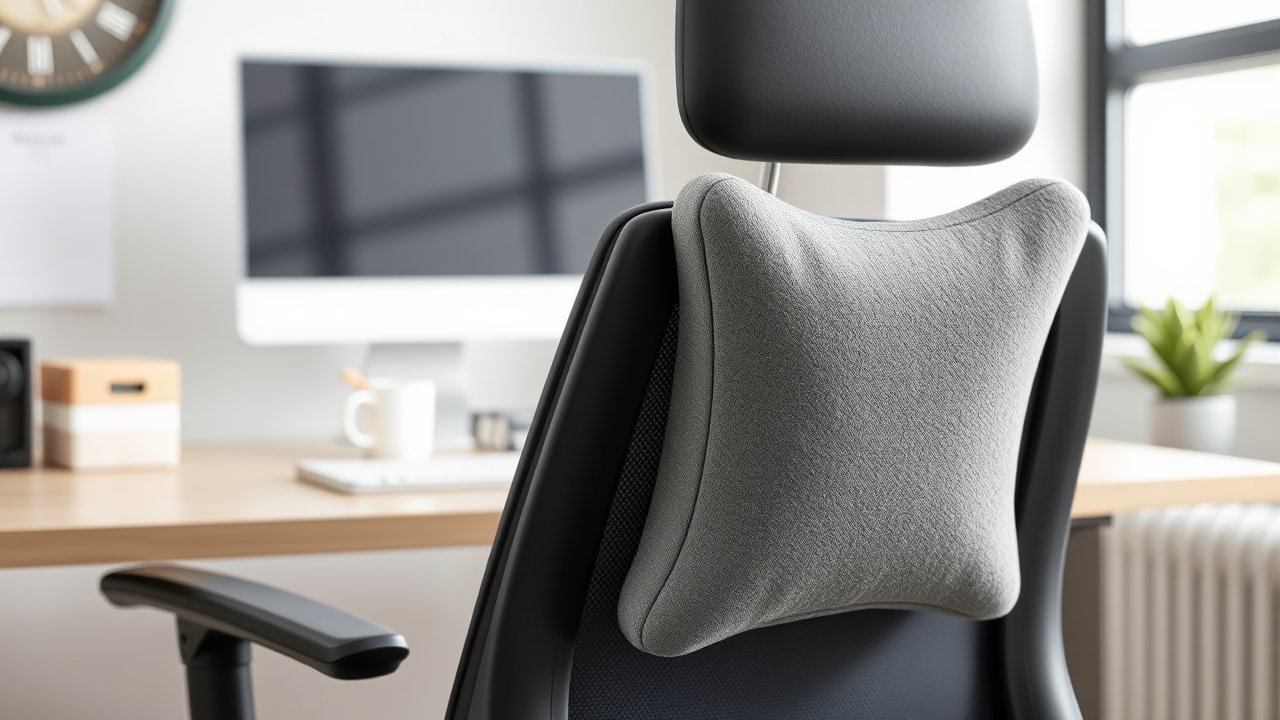
If your lower back starts aching by mid-afternoon, your chair probably isn’t supporting the natural inward curve of your spine. Many office chairs – especially budget models, dining chairs pressed into home office duty, and racing-style gaming chairs – have flat or poorly placed backrests. Without support, your lower back rounds, your pelvis tilts backward, and the muscles along your spine work overtime to hold you upright. A good lumbar pillow fills that gap and helps you sit with a more neutral posture. Choosing the best lumbar support pillow for office chair use comes down to shape, firmness, size, and how securely it attaches to your chair. In this guide, we compare six options – from memory foam cushions to simple lumbar rolls – and show you exactly where to place one for the most benefit.
As an Amazon Associate, I earn from qualifying purchases. This article contains affiliate links at no extra cost to you.
Quick Comparison Table
| Product | Price | Best For | Rating |
|---|---|---|---|
| Everlasting Comfort Lumbar Pillow | ~$35 | Best overall | ⭐⭐⭐⭐⭐ |
| Cushion Lab Lumbar Pillow | ~$70 | Best premium | ⭐⭐⭐⭐⭐ |
| ComfiLife Lumbar Support | ~$35 | Best value | ⭐⭐⭐⭐ |
| McKenzie-Style Lumbar Roll | ~$20 | Best simple support | ⭐⭐⭐⭐ |
| Mesh Back Support | ~$25–$40 | Best breathable | ⭐⭐⭐⭐ |
| Purple Back Cushion | ~$80 | Best grid design | ⭐⭐⭐⭐ |
Prices are approximate at the time of writing and may vary. Check Amazon for the current price.
Our Top Picks at a Glance
The Everlasting Comfort Lumbar Pillow is our top pick: it’s supportive, contoured, and attaches securely with adjustable straps. The Cushion Lab Lumbar Pillow offers more refined shaping for people who want premium comfort. If you want the simplest physiotherapist-style solution, a McKenzie-style lumbar roll provides targeted support for very little money.
Reviews – The Best Lumbar Support Pillow for Office Chair Use
1. Everlasting Comfort Lumbar Pillow – Best Overall
The Everlasting Comfort lumbar pillow is one of the best-selling back cushions on Amazon, and owner reviews are consistently strong. It’s made of medium-firm memory foam shaped to fit the curve of your lower back, and it attaches to your chair with two adjustable straps so it stays in place when you lean back or stand up.
Its size works with most office chairs, gaming chairs, and car seats. The mesh cover is breathable and removable for washing. Many reviewers mention that it noticeably reduced their lower back fatigue within the first week, especially on chairs with flat backrests. Some people find it too thick at first; if so, sit slightly forward and let your back settle into it gradually.
Pros:
– Contoured memory foam supports the lumbar curve
– Two adjustable straps keep it in place
– Breathable, washable cover
– Fits most chairs
Cons:
– Can feel too thick for petite users
– Firm in cold rooms until it warms up
– Reduces effective seat depth slightly
2. Cushion Lab Lumbar Pillow – Best Premium
Cushion Lab’s lumbar pillow is designed with more precise ergonomic contours than mass-market options. The high-density memory foam holds its shape for a long time, and the shape supports the lumbar curve without pushing you too far forward.
It’s more expensive, but users often note that it feels more “dialed in” and doesn’t flatten as quickly. The strap system is secure, and the cover is breathable.
Pros:
– Refined ergonomic shaping
– Durable high-density foam
– Secure strap
– Premium materials
Cons:
– More expensive
– Firm feel isn’t for everyone
– Bulkier than lumbar rolls
3. ComfiLife Lumbar Support – Best Value
ComfiLife offers a well-reviewed lumbar pillow with a contoured memory foam core, a breathable mesh cover, and adjustable straps. It’s similar to the Everlasting Comfort pillow and is often available at a slightly lower price.
It’s a great option if you want reliable support on a budget. ComfiLife also makes matching seat cushions if you want to upgrade your whole chair.
Pros:
– Affordable
– Contoured support
– Breathable cover
– Adjustable straps
Cons:
– Foam may soften faster than premium options
– Not ideal for very small chairs
4. McKenzie-Style Lumbar Roll – Best Simple Support
The lumbar roll is a classic tool recommended by many physical therapists. It’s a small cylindrical or D-shaped foam roll that sits in the curve of your lower back. Because it’s small, it gives targeted support without pushing your whole back forward.
It’s inexpensive, portable, and easy to use in any chair, car, or plane seat. Some come with a strap. If you find large lumbar pillows too bulky, a roll is a great alternative.
Pros:
– Very affordable
– Targeted, minimal support
– Portable
– Recommended by many physical therapists
Cons:
– Can slip without a strap
– Less cushioning than larger pillows
– Needs precise placement
5. Mesh Back Support – Best Breathable
Mesh back supports are lightweight frames with tensioned mesh that attach to your chair. They provide a gentle curve that supports your lower back while staying cool. They’re common in cars but work well on office chairs too.
They provide less precise support than foam pillows but are a good option if you run hot or want a slim profile.
Pros:
– Breathable
– Lightweight and slim
– Inexpensive
Cons:
– Less targeted support
– Frame can feel stiff
– Durability varies
6. Purple Back Cushion – Best Grid Design
Purple’s back cushion uses the brand’s hyper-elastic grid instead of foam. The grid supports your back while allowing airflow, and it doesn’t flatten like memory foam. It’s a good match if you already use a Purple seat cushion.
It’s expensive compared to foam pillows, but the breathability and durability are strong advantages.
Pros:
– Breathable grid design
– Doesn’t flatten over time
– Comfortable, flexible support
Cons:
– Expensive
– Different feel than foam
– Bulkier
How We Researched & Selected These Products
These picks are based on research and user reviews rather than personal testing. We compared shapes, foam densities, sizes, strap systems, and cover materials, and analyzed thousands of verified buyer reviews for comfort, durability, and placement issues. We also reviewed ergonomic guidance on lumbar support and neutral spine posture from occupational health sources. We prioritized pillows that stay in place, hold their shape, and fit a wide range of chairs.
Buyer’s Guide – How to Choose the Best Lumbar Support Pillow for Office Chair Use
Shape and Size
Full-size contoured pillows support a larger area of your back. Lumbar rolls provide targeted support in a smaller area. If your chair has a deep seat or flat back, a larger pillow often works better. If your chair already has some support, a roll may be enough.
Firmness
Medium-firm is ideal for most people. Too soft, and the pillow collapses. Too firm, and it pushes you forward uncomfortably.
Strap and Fit
A strap keeps the pillow at the correct height. Look for adjustable straps that fit around your chair’s backrest. Without a strap, pillows slide down over the day.
Cover
A breathable, washable cover keeps the pillow fresh. Mesh covers are cooler than velour.
Seat Depth Impact
Lumbar pillows push you forward slightly, reducing the effective seat depth. Tall users rarely notice, but shorter users may find their knees pushed past the seat edge. Choose a slimmer pillow or roll if you’re petite. See our list of the best ergonomic chairs for short people for chairs that fit smaller bodies.
Price vs. Quality – What to Expect at Each Budget
- Under $25: Lumbar rolls and basic pillows.
- $25–$50: Contoured memory foam with straps and washable covers.
- $50+: Premium materials and refined shapes.
How to Position a Lumbar Pillow Correctly
Placement is everything. Here’s how to get it right:
- Sit all the way back in your chair so your hips touch the backrest.
- Find your lumbar curve. It’s the small of your back, roughly at belt level or slightly above.
- Place the thickest part of the pillow in that curve. It should fill the gap between your back and the chair.
- Adjust the strap so the pillow stays at that height.
- Check your posture. You should feel supported without being pushed forward. Your shoulders should rest against the backrest.
If you feel pressure in your mid-back or the pillow pushes you away from the backrest, move it lower or choose a thinner option. If you still slouch, move it slightly higher.
Lumbar Pillow vs. New Ergonomic Chair
A lumbar pillow is a great fix for chairs that are otherwise comfortable but lack lower back support. It’s also ideal for gaming chairs, dining chairs, and car seats. However, if your chair also lacks seat height adjustment, armrest adjustment, or a stable base, a new ergonomic chair may be the better long-term solution. Our lists of the best ergonomic chairs under $300 and best ergonomic chairs for back pain include chairs with built-in adjustable lumbar support. Many people combine a lumbar pillow with a seat cushion – see our guide to the best seat cushions for office chairs.
Other Ways to Support Your Lower Back
A lumbar pillow works best as part of a healthy routine. Adjust your desk and monitor so you don’t lean forward – our desk height chart and guide on how to position your monitor help with that. Get up and move every 30 to 60 minutes. Gentle stretches like the cat-cow and standing back extensions can relieve tension. If you have persistent back pain, consult a doctor or physical therapist. The MedlinePlus back pain page from the National Library of Medicine offers helpful background on lower back pain.
Common Mistakes to Avoid
- Placing the pillow too high, which pushes your upper back forward.
- Using a pillow that’s too thick for your body or chair.
- Skipping the strap, so the pillow slides down over the day.
- Sitting forward, away from the pillow – it only helps if you sit back.
- Relying on the pillow alone instead of fixing desk height and taking breaks.
Frequently Asked Questions
Do lumbar support pillows really work?
For many people, yes. By filling the gap between your lower back and the chair, a lumbar pillow helps you maintain a more neutral posture and reduces muscle fatigue. Results vary, and it works best combined with good desk setup and regular movement.
Where should a lumbar pillow be placed?
In the small of your back, roughly at belt level. The thickest part should fill the inward curve of your lower spine.
Can a lumbar pillow make back pain worse?
If it’s too thick, too firm, or placed incorrectly, it can cause discomfort. Adjust the position or choose a thinner pillow or roll. If pain persists, consult a healthcare professional.
Should I use a lumbar pillow with an ergonomic chair?
If your ergonomic chair has adjustable lumbar support that fits you, you probably don’t need one. If the built-in support doesn’t reach your lumbar curve, a pillow can help.
Is memory foam or a lumbar roll better?
Memory foam pillows provide broader, cushioned support. Lumbar rolls provide targeted support. Try a roll if pillows feel too bulky.
How long does a lumbar pillow last?
Most memory foam lumbar pillows last one to three years of daily use. Replace yours when it no longer springs back or feels flat in the middle.
Can I use a lumbar pillow in my car?
Yes, and it’s especially helpful on long road trips. Most lumbar pillows and rolls work in car seats, which is helpful on long drives.
Final Verdict
The Everlasting Comfort Lumbar Pillow is the best lumbar support pillow for office chair use for most people – supportive, secure, and affordable. The Cushion Lab Lumbar Pillow offers premium shaping, while a McKenzie-style lumbar roll provides simple, targeted support. Position your pillow in the small of your back, sit all the way back, and combine it with good desk ergonomics and regular movement for the best results.