
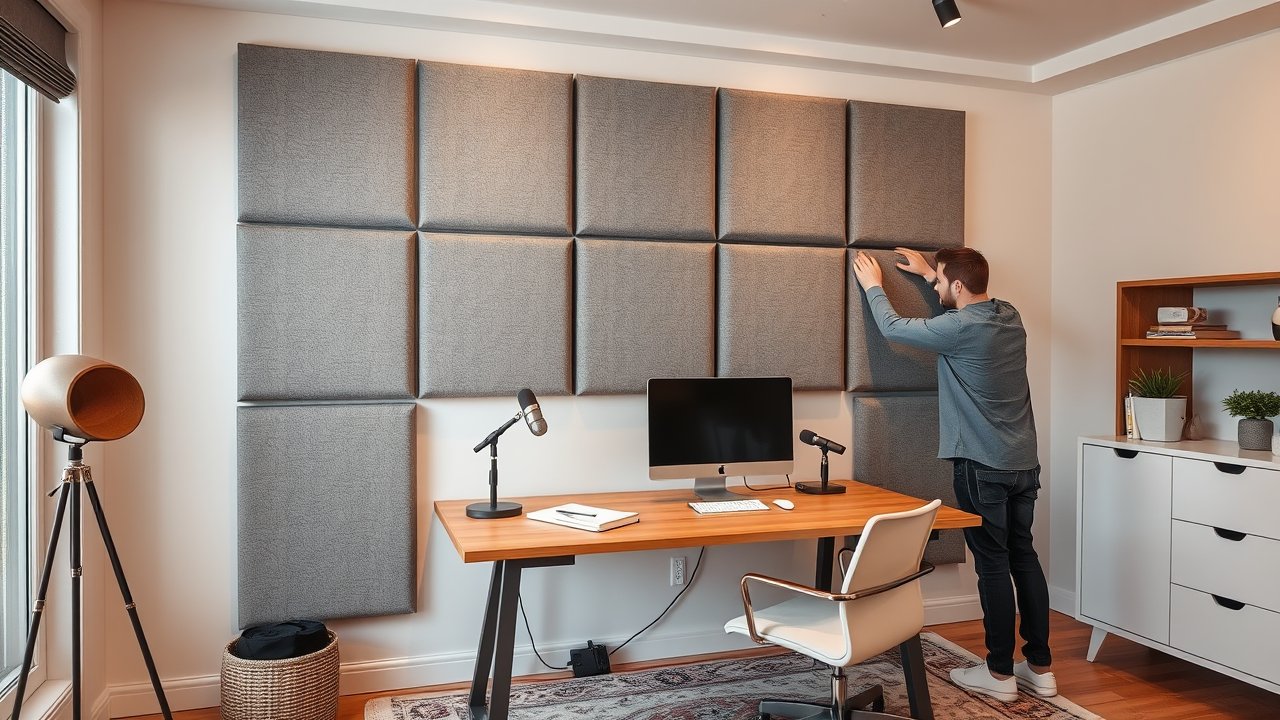
Noise is one of the biggest productivity killers when you work from home. Traffic, neighbors, family members, and even your own echoey room can make it hard to focus and make you sound unprofessional on calls. The good news: you don’t need to rebuild your walls to get a dramatically quieter office. Learning how to soundproof a home office is mostly about understanding where sound gets in and fixing the weakest points first – usually the door, windows, and hard surfaces. This guide walks you through eight practical steps, from free fixes to bigger upgrades, with options for renters and homeowners alike.
As an Amazon Associate, I earn from qualifying purchases. This article contains affiliate links at no extra cost to you.
What You Need Before You Start
- A notepad to list your noise sources (outside traffic, people in the house, echo)
- A tape measure for your door gaps and windows
- A budget plan – most offices improve a lot for $100 to $400
- Removable adhesive strips or hooks if you rent
- An afternoon for the basic fixes
Soundproofing vs. Sound Treatment – Know the Difference
Before buying anything, understand that there are two different goals:
- Soundproofing blocks sound from getting in or out. It requires mass, sealing gaps, and decoupling – think heavy doors, door seals, and window inserts.
- Sound treatment reduces echo and reverb inside the room. It uses soft, absorbent materials like acoustic panels, rugs, and curtains.
Most home offices need some of both. Acoustic foam alone won’t stop your neighbor’s dog from being heard, but it will make you sound much better on calls. Sealing the door won’t fix an echoey room, but it will block a lot of household noise.
Step 1: Identify Where the Noise Comes From
Spend a day noting what bothers you. Is it outdoor noise through the window? Voices through the door? Footsteps from upstairs? Echo when you speak? Sound travels through the weakest point, so a solid wall with a hollow door is only as quiet as the door. Close the door and listen near the edges, the window frame, and outlets. Wherever you hear more noise, that’s where you’ll start.
Step 2: Seal the Door
The door is usually the biggest weak point. Most interior doors are hollow-core and have gaps at the bottom of half an inch or more – sound pours through gaps.
Start with a door seal kit: adhesive weatherstripping around the frame and a door sweep or draft stopper at the bottom. This step alone can make a noticeable difference for about $20 to $40. If you own your home, consider replacing a hollow-core door with a solid-core door – it adds mass and blocks much more sound.
Renters can use slip-on door bottom seals and removable weatherstripping that won’t damage the frame.
Step 3: Treat the Windows
Windows let in traffic and outdoor noise. Here are options from cheapest to most effective:
- Seal gaps with removable caulk or weatherstripping.
- Hang heavy, sound-dampening curtains. Thick, multi-layer curtains reduce some outdoor noise and a lot of echo. Mount the rod wide and high so the curtains overlap the wall.
- Window inserts. Acrylic inserts that press into the window frame create an air gap and can significantly reduce outside noise. They’re more expensive but very effective and renter-friendly.
Step 4: Add Soft Surfaces to Reduce Echo
Hard floors, bare walls, and big desks create echo. Echo makes your voice sound hollow on calls and makes the room feel louder.
- Area rug with a thick pad: absorbs footstep noise and reduces echo, especially on hardwood or tile.
- Upholstered furniture: a reading chair or fabric-covered ottoman adds absorption.
- Bookshelves filled with books: books of different sizes diffuse sound and break up reflections.
- Fabric wall hangings or tapestries: a simple, decorative way to add absorption.
A good test: clap your hands in the room. If you hear a sharp ring or flutter, you need more soft surfaces.
Step 5: Install Acoustic Panels
Acoustic panels are the most effective way to treat echo. Fabric-wrapped panels made of mineral wool or fiberglass absorb a wide range of frequencies, while cheap thin foam mainly absorbs high frequencies.
Where to place them:
- Behind your monitor (the wall you face while talking)
- At the first reflection points on the side walls – sit at your desk and have someone slide a mirror along the wall; wherever you see your mouth or speakers in the mirror is a reflection point
- Behind you, especially if you take video calls
Start with four to six panels for a small office. Renters can mount lightweight panels with removable adhesive strips or lean them on shelves. If you want your office to look good on camera too, panels come in many colors and fabric finishes. Pair them with our home office lighting setup guide for a polished video background.
Step 6: Reduce Noise From Floors and Ceilings
If noise comes from below or above, it’s harder to fix. Thick rugs with dense pads help with footsteps. For upstairs neighbors, there’s limited renter-friendly help beyond white noise and good headphones. Homeowners can add insulation or resilient channels during renovation, but that’s a bigger project.
Step 7: Mask Remaining Noise
Some noise will always get through. Masking it with steady background sound makes it less distracting. A white noise machine or fan creates a consistent sound that covers irregular noise like voices or barking. Many people find brown or pink noise more pleasant than pure white noise.
For focus, a pair of noise cancelling headphones for working from home is the most effective solution of all – they reduce what you hear without changing your room.
Step 8: Improve How You Sound on Calls
Soundproofing also affects how others hear you. A directional microphone placed close to your mouth picks up your voice and less of the room. A headset with a boom mic is even better. See our picks for the best microphones for working from home. Combine a good mic with acoustic panels behind your monitor and you’ll sound like you’re in a professional studio.
Room-by-Room Tips: Where Your Office Is Matters
Spare Bedroom Office
Spare bedrooms are often the easiest to treat because they usually have a door and carpet or a rug. Focus on sealing the door, adding curtains, and hanging a few panels behind your monitor. If the bed stays in the room, it already absorbs a lot of sound.
Living Room or Open-Plan Corner
Without a door, you can’t truly soundproof an open corner, but you can reduce how much noise reaches you. Use a tall bookshelf or room divider to create a barrier, place a thick rug under your desk, and rely more on headphones and white noise. Position your desk so you face a wall, not the room, to reduce visual and audio distractions. Our guide to the best home office setup for small apartments has more layout ideas.
Basement Office
Basements are naturally quiet from outside noise but often suffer from footsteps overhead and echo off concrete. Rugs with thick pads, acoustic panels, and fabric ceiling treatments help a lot. Watch out for HVAC noise from furnaces or water heaters – a door seal on the utility room helps.
Converted Closet or “Cloffice”
Small spaces echo less if you fill them with soft materials. Line the back wall with a panel or hang a thick tapestry. Because the space is small, even one or two panels make a big difference.
Shared Office
If two people work in the same room, the biggest problem is hearing each other’s calls. Position desks back-to-back or facing opposite walls, place a bookshelf or acoustic divider between them, and use headsets with boom mics so each person can talk quietly. See our guide to shared home office setups for layout tips.
Quick Wins You Can Do Today (Free)
- Close your office door during calls and focus work.
- Move your desk away from shared walls or windows facing the street.
- Put a folded towel or blanket along the bottom of the door as a temporary draft stopper.
- Fill an empty bookshelf with books, binders, and soft storage boxes.
- Ask household members for a simple “on a call” signal, like a sign on the door.
How to Test Your Results
Before and after each change, record a short voice memo of yourself talking at your desk, and use a free sound meter app to measure the background noise level. You’ll hear the reduction in echo on the recording, and the meter will show whether outside noise has dropped. This helps you decide whether the next upgrade is worth it, or whether you’ve already reached a comfortable level.
Recommended Products for Soundproofing a Home Office
- Door Seal Kit & Draft Stopper – The cheapest and most effective first upgrade.
- Fabric-Wrapped Acoustic Panels – Reduce echo and improve call audio.
- Sound-Dampening Curtains – Absorb echo and reduce some outside noise.
- Thick Rug Pad – Reduces footstep noise and echo under area rugs.
- White Noise Machine – Masks voices and irregular sounds.
- Window Inserts – A renter-friendly way to block traffic noise.
Prices are approximate at the time of writing and may vary. Check Amazon for the current price.
How to Soundproof a Home Office on a Budget
Under $100: Door seal kit, white noise machine, and rearranging furniture with a bookshelf on a shared wall.
$100–$300: Add sound-dampening curtains, a thick rug with a pad, and four to six acoustic panels.
$300+: Window inserts, a solid-core door (homeowners), and premium acoustic panels.
Common Mistakes to Avoid
- Buying egg-crate foam to block noise. Foam reduces echo but does very little to stop sound from passing through walls.
- Ignoring the door gap. Even a small gap lets through a surprising amount of sound.
- Covering every wall with panels. Too much absorption makes a room feel “dead.” Treat key reflection points instead.
- Forgetting the floor. Hard floors are a major echo source – a rug makes a big difference.
- Damaging a rental. Use removable mounting strips and freestanding solutions.
FAQ
What is the cheapest way to soundproof a home office?
Seal the door with a door sweep and weatherstripping, add a thick rug, and hang heavy curtains. Together these cost under $100 and fix the biggest weak points.
Do acoustic panels block noise from outside?
No. Acoustic panels reduce echo inside the room. To block outside noise, you need mass and sealing – door seals, window inserts, and solid doors.
Can I soundproof a home office in an apartment?
Yes. Use removable door seals, window inserts, curtains, rugs, freestanding bookshelves, and adhesive-mounted panels. These improve noise levels without damaging walls.
How many acoustic panels do I need for a home office?
For a small office of around 100 square feet, four to six panels placed at reflection points usually make a noticeable difference.
Will soundproofing make my office too hot or stuffy?
Sealing the door and windows reduces airflow, so plan for ventilation. Open the door between calls, use a quiet fan or air purifier, and avoid blocking HVAC vents with panels or furniture.
Do soundproof curtains actually work?
They help, but expect realistic results. Heavy curtains reduce echo significantly and soften some outdoor noise, especially higher frequencies like voices. They won’t eliminate low-frequency rumbles like trucks. For that, window inserts are more effective.
Is acoustic foam the same as acoustic panels?
Not quite. Thin foam mainly absorbs high frequencies and can make a room sound muffled. Thicker fabric-wrapped panels made of mineral wool or fiberglass absorb a wider range of frequencies, which gives a more natural sound.
Does a bookshelf really help with sound?
Yes. A full bookshelf against a shared wall adds mass and diffuses sound, reducing echo and some noise transmission.
Final Thoughts
Learning how to soundproof a home office comes down to sealing gaps, adding mass where you can, and softening hard surfaces. Start with the door, treat the windows, add rugs and panels, and mask what’s left with white noise or headphones. For more background on how noise affects health and concentration, the EPA’s noise information page is a useful starting point. A quieter office means better focus, better calls, and less end-of-day fatigue.